Network Security
Get it free — early access
Cert Watch
Find every SSL certificate you own — and never get surprised by an expiry again.
Early access
Free
normally $79
Free during early access — we email you a full licence key, yours to keep.
What it does
Deep discovery
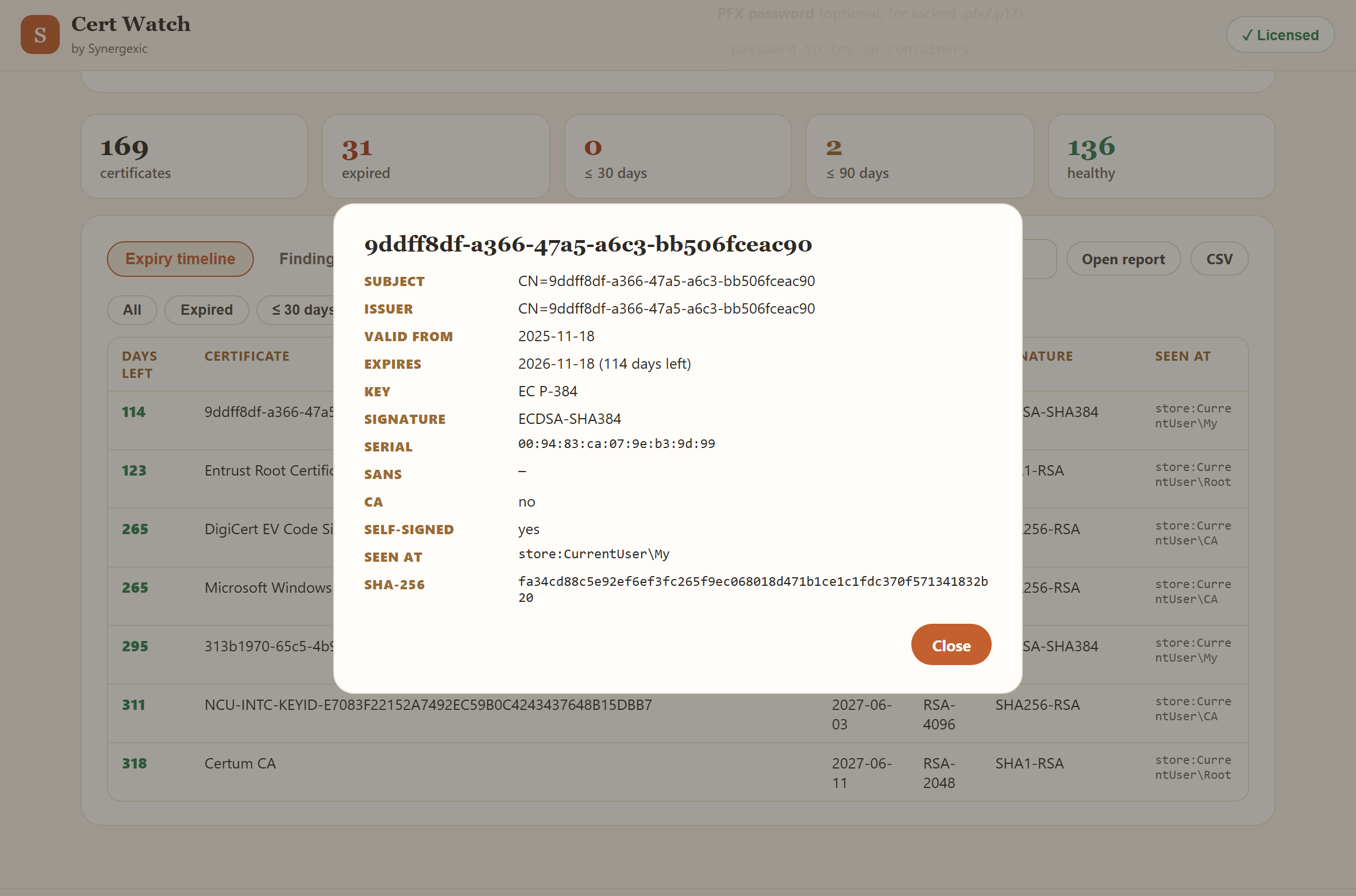
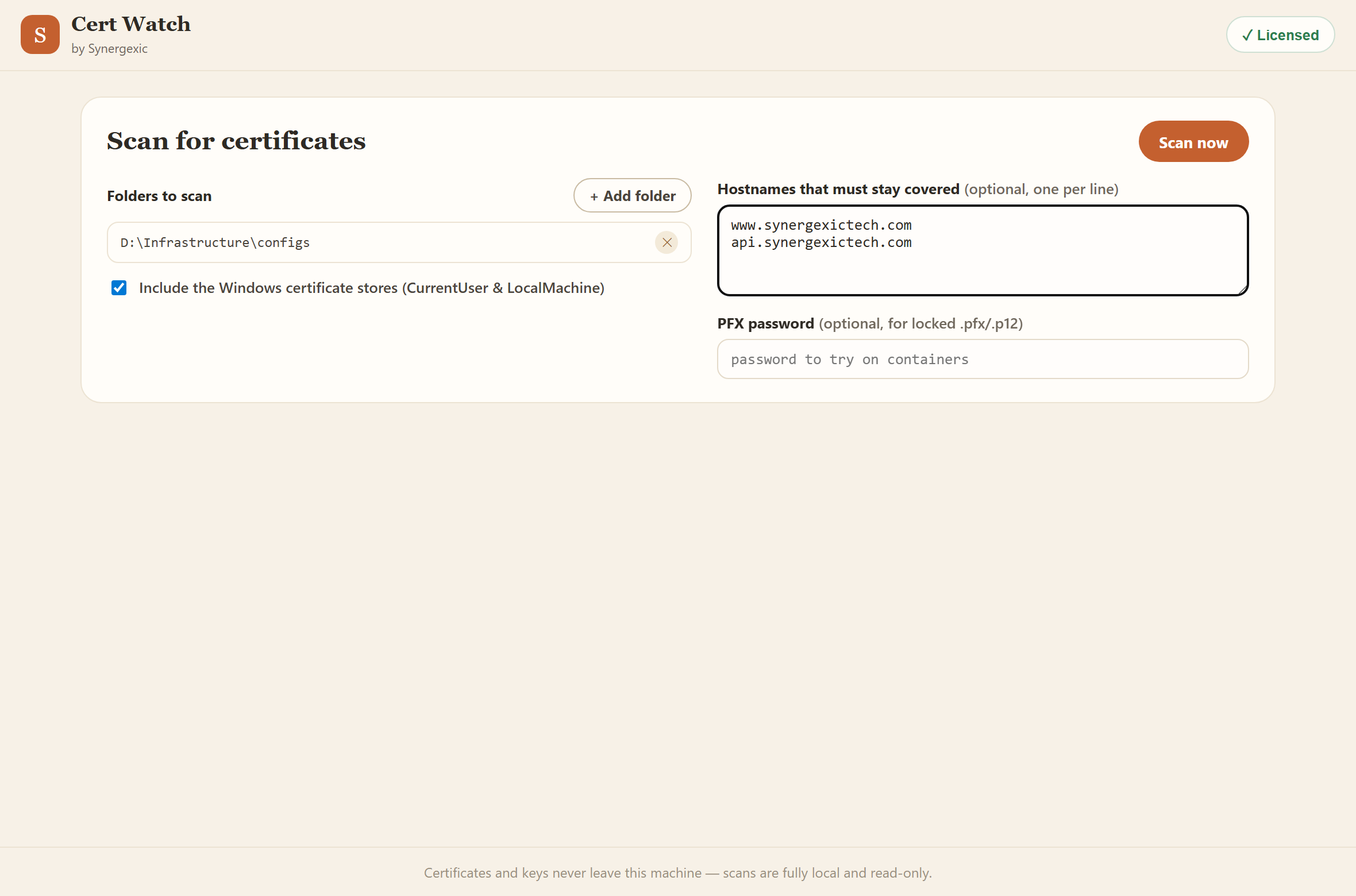
Finds certificates in Windows stores, config files, PEM and PFX/PKCS#12 bundles, and whole folder trees.
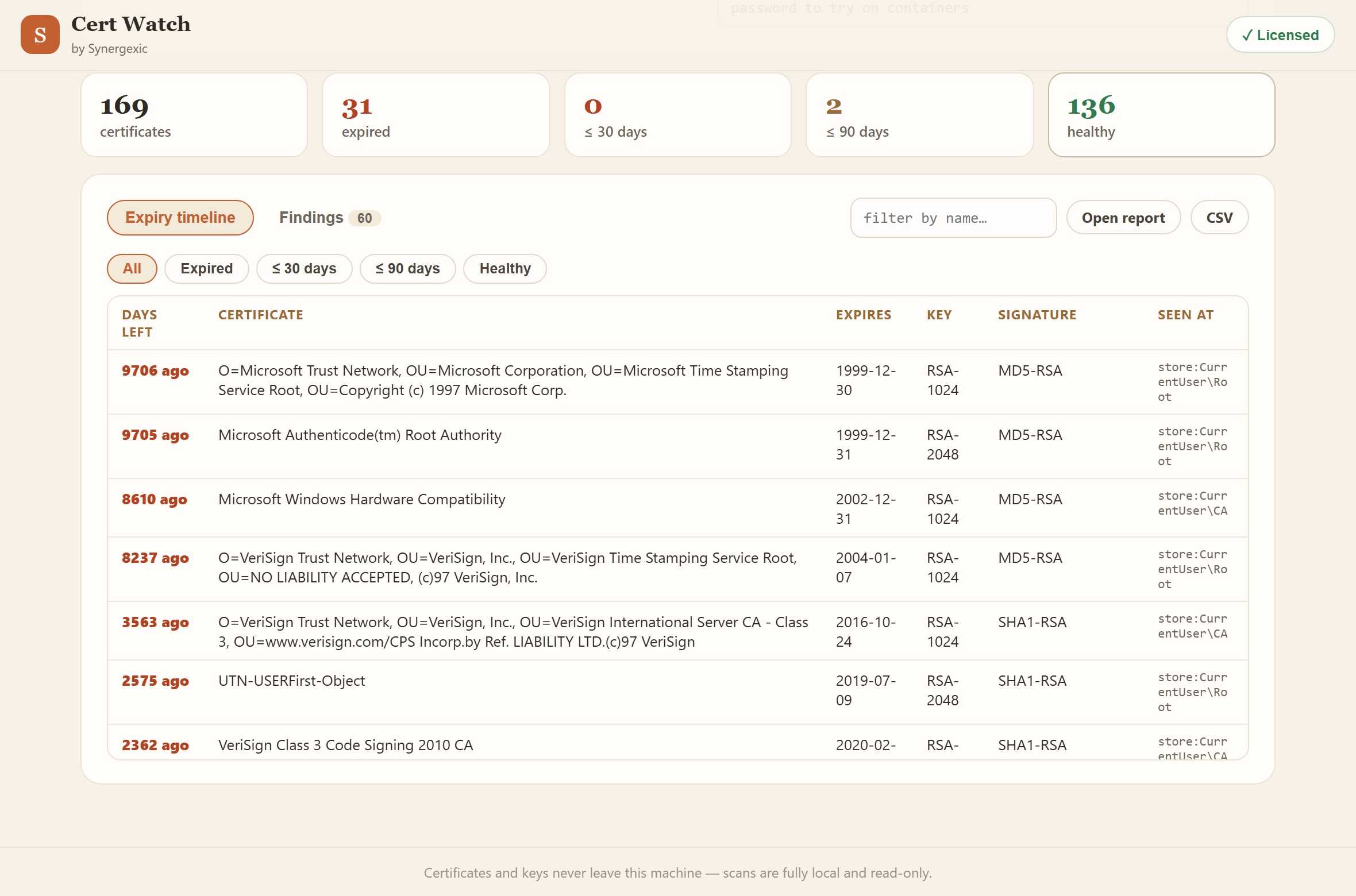
Expiry timeline
Every certificate on one timeline, sorted by days remaining.
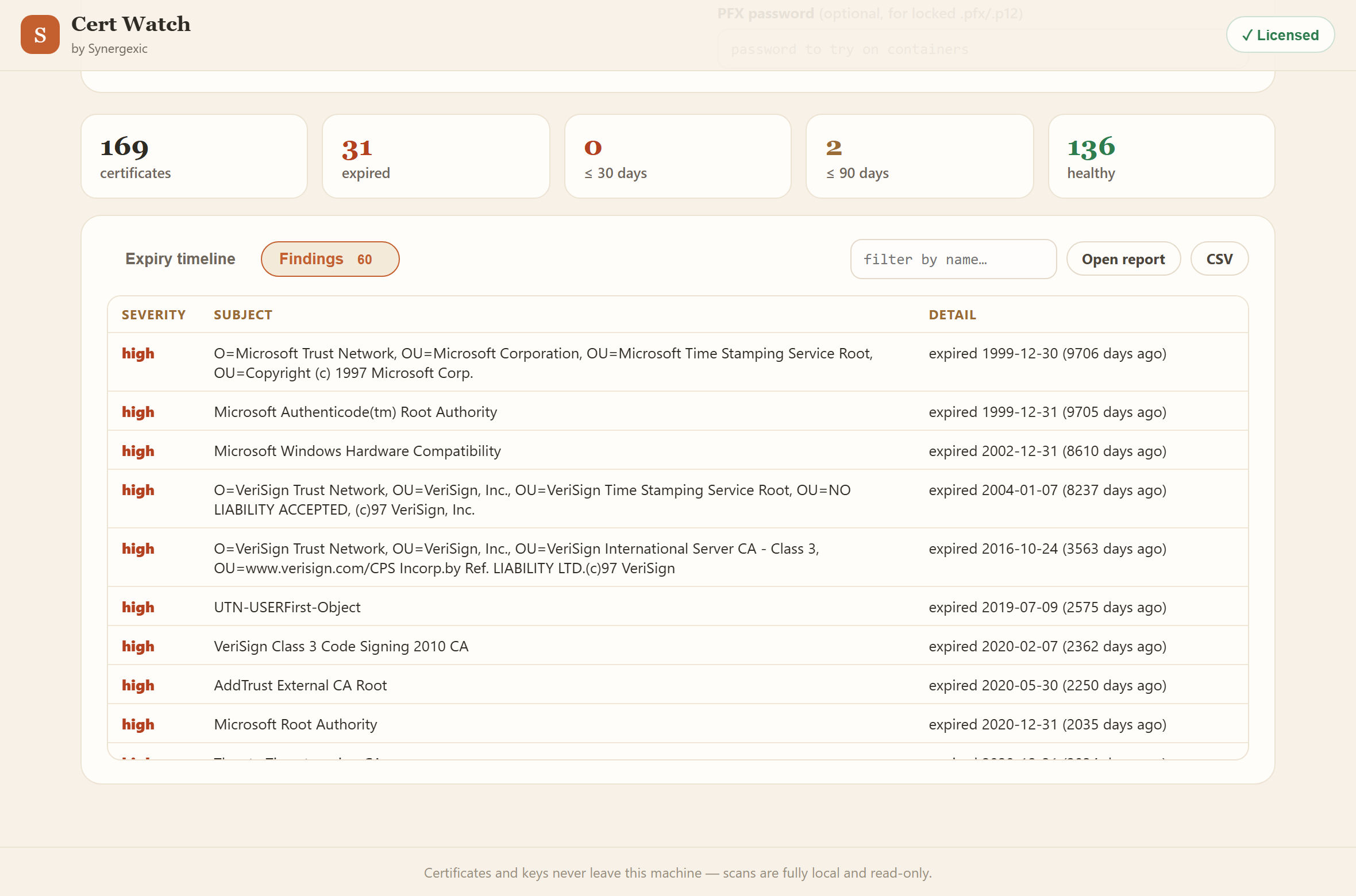
Weak-crypto flags
Highlights SHA-1 signatures, short keys and long-expired leftovers.
Chain checks
Spots incomplete chains and mismatched hostnames before browsers do.
Report exports
Share tidy HTML or CSV expiry reports with your team.
Offline & private
Scans run locally. Your certificates and keys never leave your machine.
System requirements
- Windows 10 or 11 (64-bit)
- 4 GB RAM minimum
- 100 MB free disk space
- Read access to the folders or stores you want scanned
Early access
Free normally $79 — yours to keep
- ✓ Full version, no feature limits
- ✓ One year of free updates
- ✓ Use on your work & home machine
- ✓ Friendly email support
Questions, answered
It says free — what’s the catch?
There isn’t one. Cert Watch is free while we’re in early access, and what you get is a full licence key, not a trial — every limit is removed. When it becomes a paid product ($79), your key carries on working at no charge. We ask one thing in return: tell us what it gets wrong.
Does it need agents on my servers?
No. Run it where the certificates live, or point it at mounted paths and exported bundles — no agents, no remote access.
Can it renew certificates for me?
No — Cert Watch is a discovery and reporting tool. It tells you exactly what you have and when it expires; renewal stays in your existing process.
Does it read Java keystores (JKS)?
Not yet. Cert Watch spots JKS files during a scan and tells you where they are, but it can't read inside them — convert one with `keytool -importkeystore` to PKCS#12 and it'll be scanned in full. Native JKS support is planned.
Do my keys or certs get uploaded?
Never. Everything is read and reported locally.